About the Platform
Objectives, scientific background, curation methodology, and research group
Mission, Core Objectives & Target Audiences
Bacterial biofilms represent one of the foremost global health and industrial challenges of our time. Enclosed within a self-produced extracellular polymeric substance (EPS) matrix, biofilm-associated bacteria exhibit recalcitrance and tolerance to conventional antibiotics and host immune defenses up to 1,000-fold greater than their planktonic counterparts. They are responsible for over 80% of human microbial infections—including catheter encrustations, orthopaedic and cardiovascular implants, chronic wounds, and cystic fibrosis pulmonary infections—as well as extensive biofouling and biocorrosion across industrial infrastructures.
The Biofilms Structural Database (BSD) was established in 2020 by researchers at the University of Porto (BioSIM / FEUP) and University of Coimbra (BIA Lab), published in Trends in Biotechnology (Cell Press), to provide the scientific community with the first specialized, open-access repository unifying atomic-resolution macromolecular targets and chemical ligands strictly associated with bacterial biofilm developmental mechanisms.
Intended Users & Scientific Audiences
As described in the foundational publication, BSD was specifically constructed to serve four complementary scientific sectors:
Virtual screening, molecular docking, molecular dynamics (MD), pharmacophore modeling, and binding pocket volume calculations across 498 high-resolution 3D structures and AlphaFold DB models.
Structure-based drug design (SBDD) of quorum-sensing inhibitors (QSIs), matrix disruptors, and anti-adhesion molecules using 131 co-crystallized chemical ligands, SMILES, and ChEMBL bioactivities.
Dissecting the atomic mechanisms governing the 5 stages of biofilm formation across 47 bacterial species, with UniProt functional annotations, oligomerization states, and catalytic cofactors.
Developing non-biocidal interventions for medical device infections (implants, catheters, endotracheal tubes) and mitigating industrial biocorrosion and membrane biofouling.
www.biofilms.biosim.pt) is now permanently hosted at https://biofilmsdb.com.
Scientific Leadership & Project Supervision
The Biofilms Structural Database was conceptualized, curated, and led under the supervision of Dr. Sérgio F. Sousa and Dr. Manuel Simões, uniting expertise in computational structural biology and experimental biofilm microbiology:

Dr. Sérgio F. Sousa
Primary Affiliation: Principal Investigator & Group Leader of the BIA Lab (Bioengineering, Artificial Intelligence, and Molecular Simulation Laboratory), CERES (Chemical Process Engineering and Forest Products Research Centre), Department of Chemical Engineering (DEQ), Faculty of Sciences and Technology (FCTUC), University of Coimbra, Portugal.
Secondary / Historical Affiliation: Founder and Principal Investigator of the BioSIM Research Group, Department of Biomedicine, Faculty of Medicine, University of Porto (FMUP).
Scientific Expertise: Computational enzymology (QM/MM), molecular dynamics (MD) simulations, protein-ligand docking, virtual screening, free energy calculations, and machine learning methods applied to biomolecular engineering and drug discovery.
Role in BSD: Project co-coordinator leading structural bioinformatics curation, molecular data modeling, chemical cross-referencing, and computational infrastructure development.
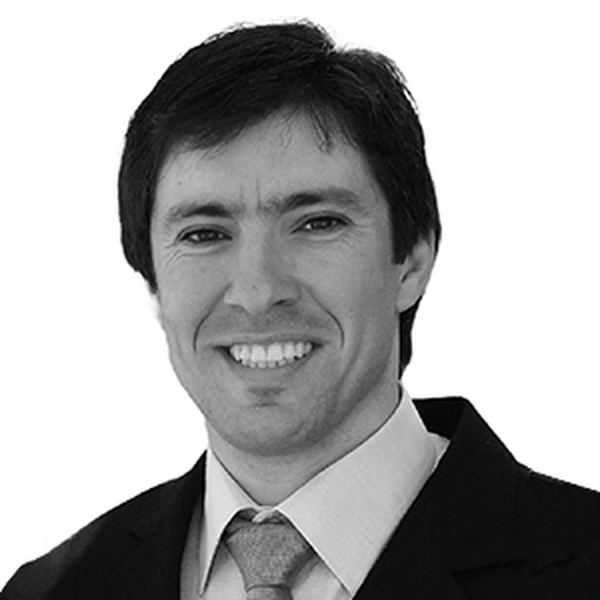
Dr. Manuel Simões
Primary Affiliation: Associate Professor with Aggregation, Department of Chemical Engineering, Faculty of Engineering, University of Porto (FEUP), Portugal.
Research Laboratories: Senior Researcher at LEPABE (Laboratory for Process Engineering, Environment, Biotechnology and Energy) and ALiCE (Associate Laboratory in Chemical Engineering).
Scientific Expertise: Applied biofilm microbiology, molecular mechanisms of antimicrobial tolerance and phenotypic resistance, surface adhesion kinetics, disinfection protocols, and characterization of natural and synthetic antibiofilm compounds.
Role in BSD: Project co-coordinator leading microbiological target validation, mechanism classification, clinical relevance assessment, and biological consistency across bacterial families.
How to Cite
If you use the Biofilms Structural Database in academic research, drug discovery projects, or scientific publications, please cite the foundational publication in Trends in Biotechnology:
Magalhães, R. P., Vieira, T. F., Fernandes, H. S., Melo, A., Simões, M., & Sousa, S. F. (2020). The Biofilms Structural Database. Trends in Biotechnology, 38(9), 937–940. https://doi.org/10.1016/j.tibtech.2020.04.002
@article{Magalhaes2020BiofilmsDB,
  author    = {Magalh{{\~{{a}}}}es, Rita P. and Vieira, Tatiana F. and Fernandes, Henrique S. and Melo, Andr{{'{e}}} and Sim{{\~{{o}}}}es, Manuel and Sousa, S{{'{e}}rgio F.},
  title     = {The Biofilms Structural Database},
  journal   = {Trends in Biotechnology},
  volume    = {38},
  number    = {9},
  pages     = {937--940},
  year      = {2020},
  month     = {sep},
  publisher = {Elsevier},
  doi       = {10.1016/j.tibtech.2020.04.002},
  url       = {https://doi.org/10.1016/j.tibtech.2020.04.002}
}